3 hr
Sorrento Farm Pizza Class with Wine & Limoncello
- Entry ticket
- Mobile voucher
- Valid same day
- Free cancellation
Sorrento Cooking Class — Hands-On Lessons at Villa Silvana
Flour on the table, lemons on the sill.
Compare fares, pick the fit — all bookings are mobile-voucher and eligible for free cancellation where shown.
3 hr
3 hr
1 hr 30 min
Worth it for groups and hands-on foodies
A sorrento cooking class at Villa Silvana runs 180 to 300 EUR per person, with no gate fee beyond the booking. For that you get hands-on instruction, a multi-course meal you cook and eat, local wine, and the hillside view. Compare it to a 12 to 15 EUR street-food fritti and gelato crawl: the class costs ten times more, so the food alone never justifies it. The value sits in the pasta-making tuition, the limoncello tasting, and the sit-down meal that doubles as dinner. Solo travellers feel the sting most, since per-head rates rarely drop. These sorrento cooking class tours pay off for couples and small groups who split a private booking, folding the price into an evening's food and entertainment. If you only want to eat well cheaply, skip it.
Bottom line: Book the sorrento cooking class tickets as a shared group evening and it earns its price; go solo just to eat and it will not.
Hand-picked experiences loved by thousands of travelers
3 hours
Free Cancellation
Make real Neapolitan pizza, fresh pasta & tiramisu on a Gulf of Sorrento terrace with wine & music.
4 hours
Free Cancellation
Cook authentic Italian recipes on a working family farm with sweeping Amalfi Coast panoramas.
3.5 hours
Free Cancellation
Master fresh pasta & tiramisu in a hilltop Sorrento villa, then dine alfresco with expert wine pairings.
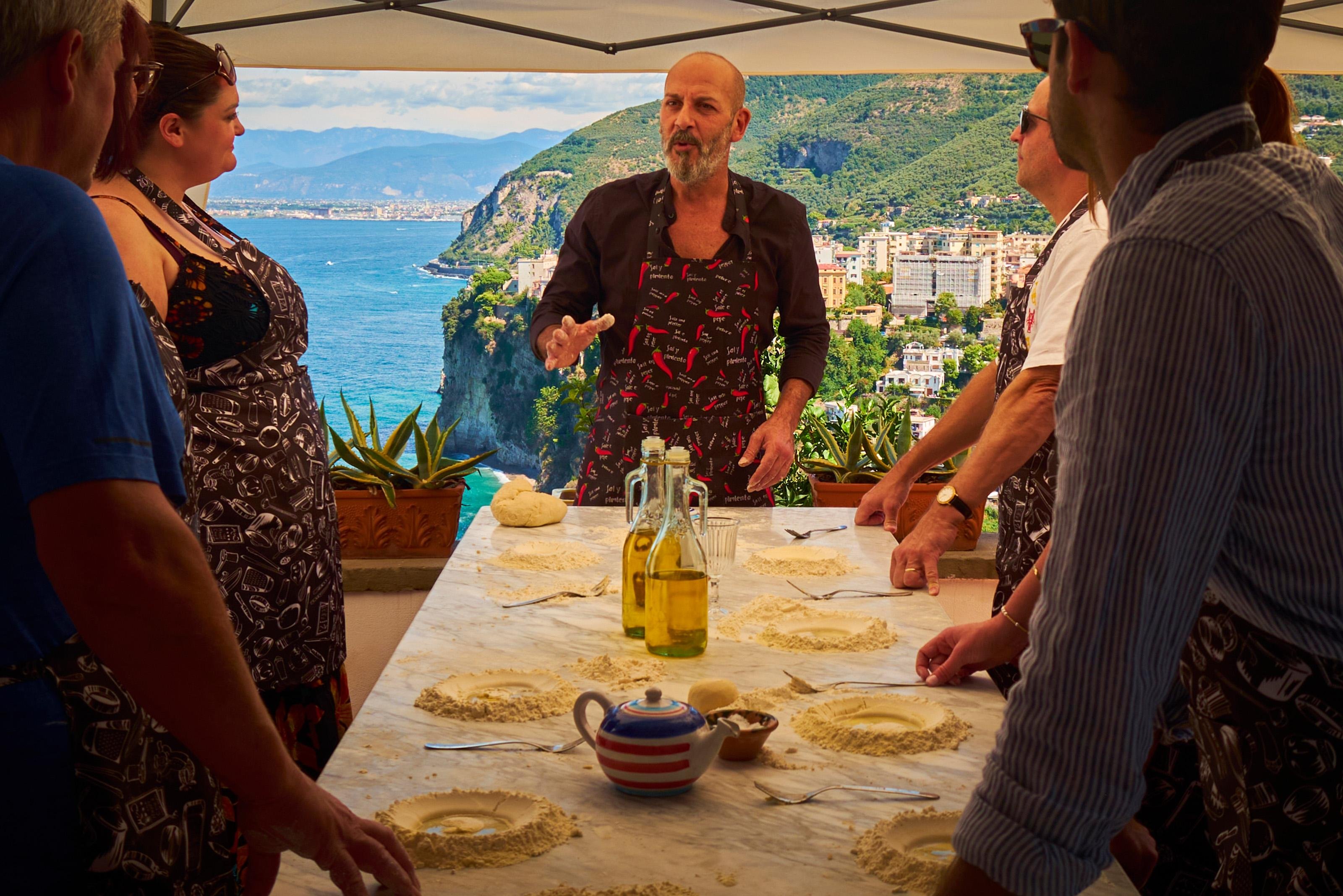
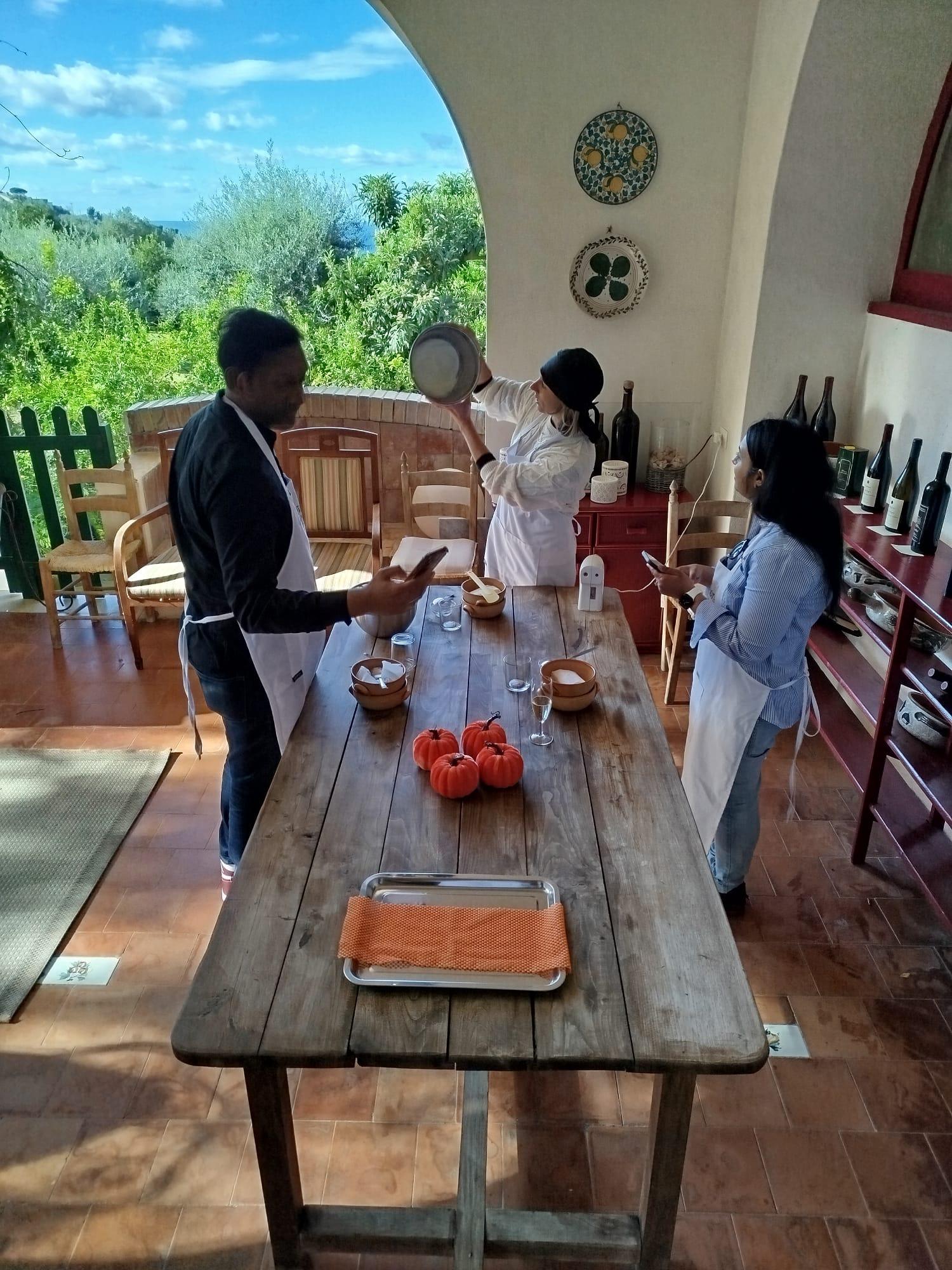
Guests meet the chef on the Villa Silvana terrace and get an apron for the sorrento cooking class
Step-by-step instruction on dough, sauces, or limoncello depending on the chosen course
Dishes are finished and plated with guidance from the chef
Guests sit down to eat what they made while overlooking the Gulf of Naples and Mount Vesuvius
Chef shares written recipes to take home
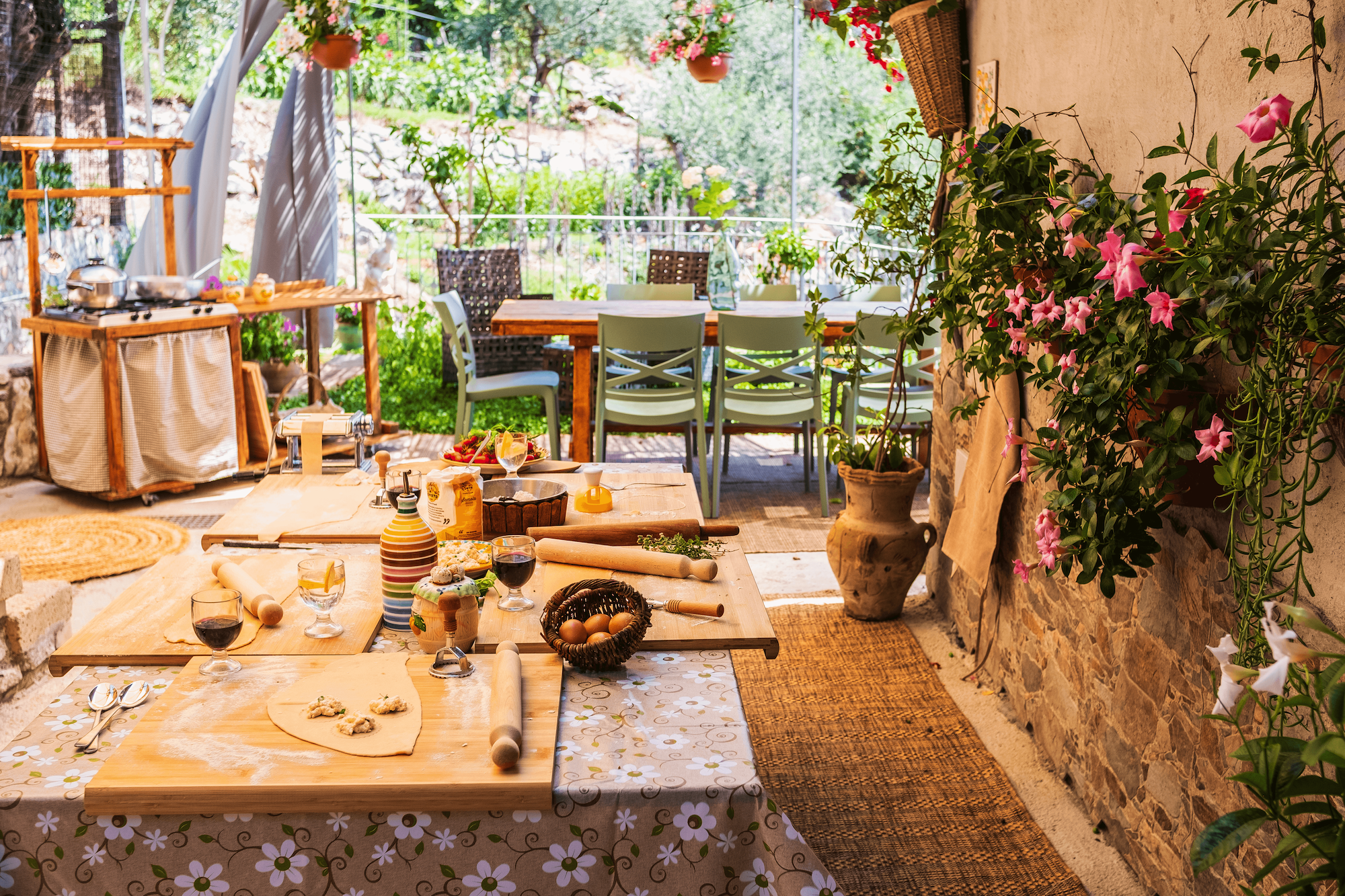
The open-air terrace where most sessions of the sorrento cooking class take place looks directly over the Gulf of Naples toward Mount Vesuvius. Meals prepared during the lesson are served here at long communal tables.
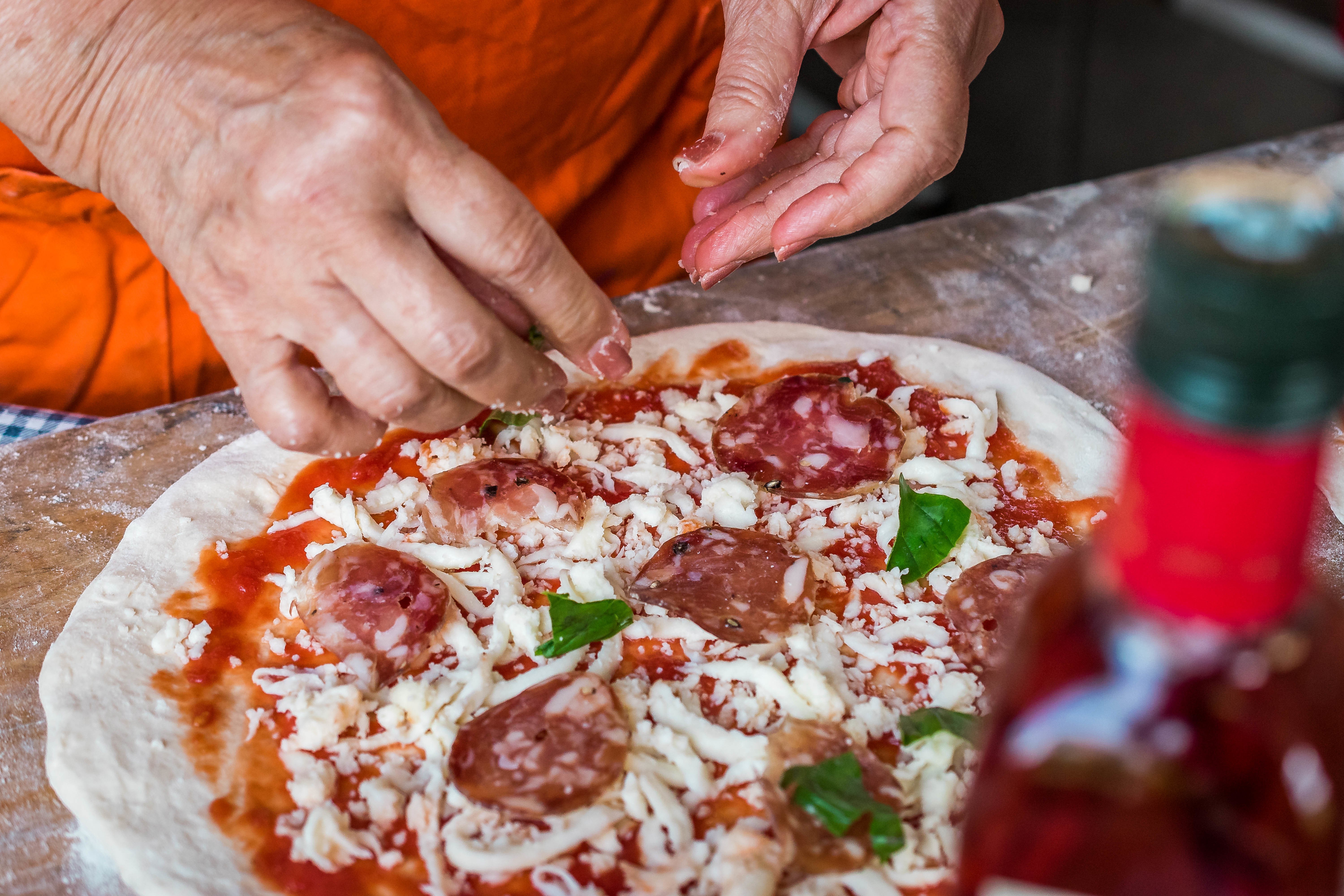
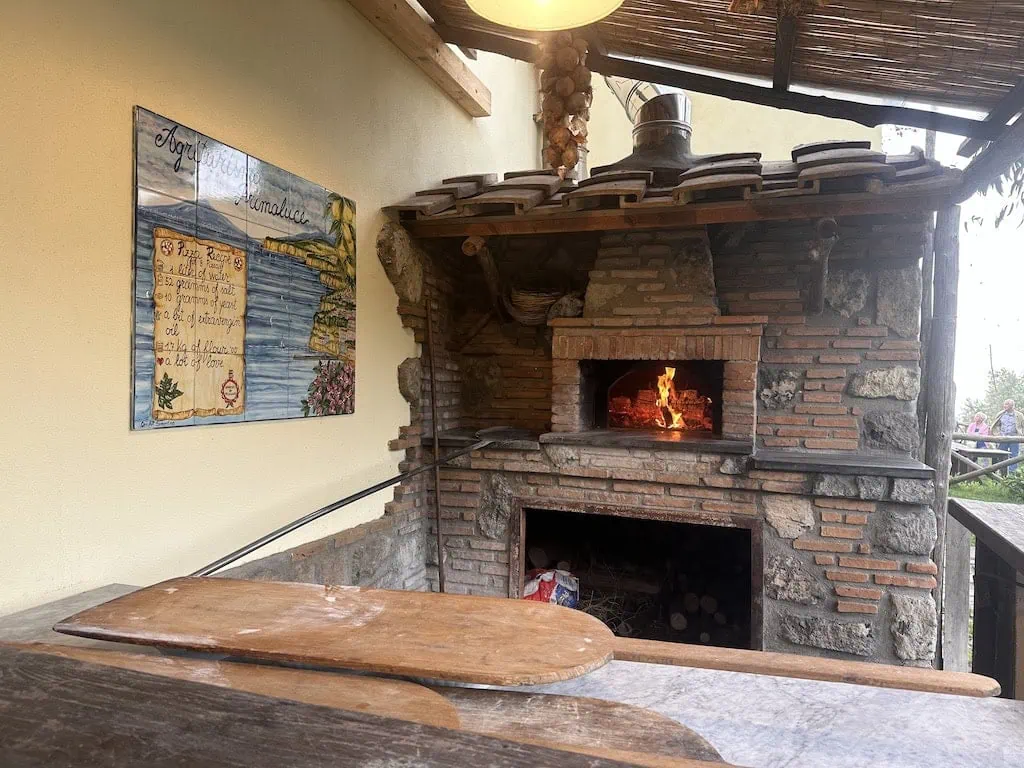
A traditional wood-fired oven set in the villa's gardens is used for the Neapolitan pizza lessons, reaching temperatures well above 400°C to cook a pizza in under two minutes. Guests stretch and top their own dough before it goes in.
A large indoor kitchen room serves as the backup venue during rain or cooler months, fitted with multiple workstations for hands-on pasta and dough preparation. It keeps the sorrento cooking class running year-round regardless of weather.
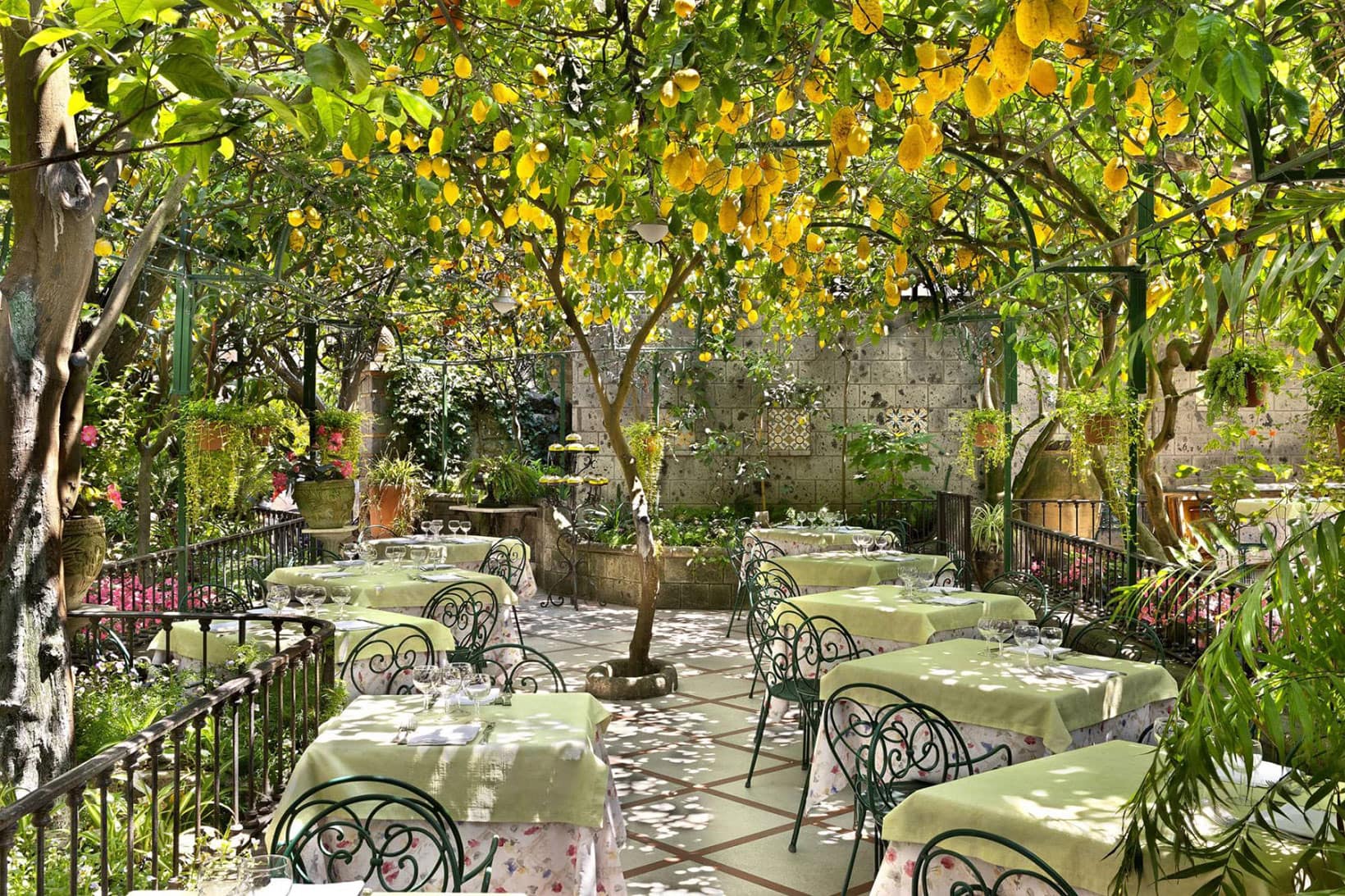
Villa Silvana is surrounded by Mediterranean gardens of lemon and orange trees, the same citrus used in the school's limoncello-making lessons. The scent of the groves is often noted by guests during the outdoor sessions.
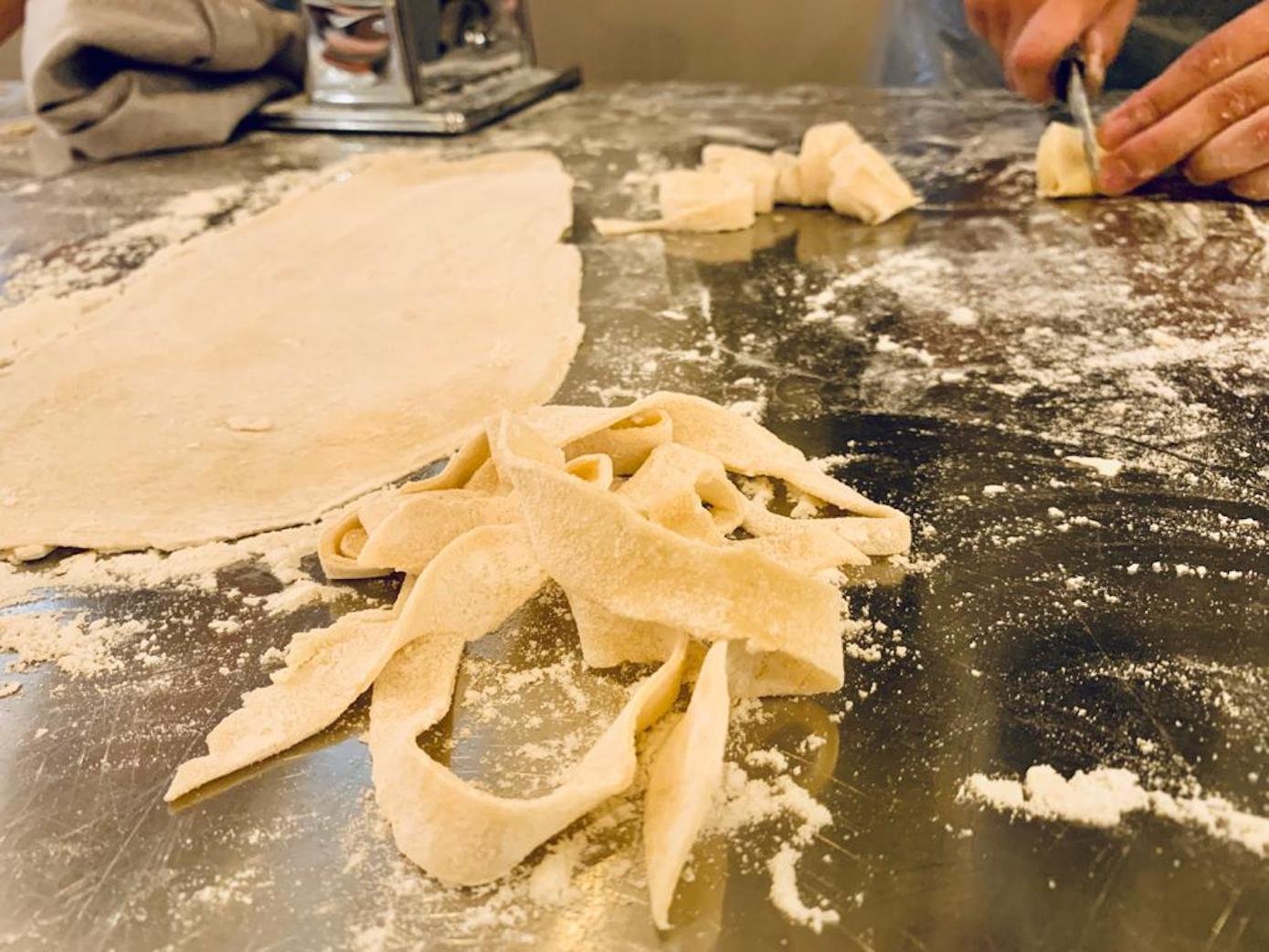
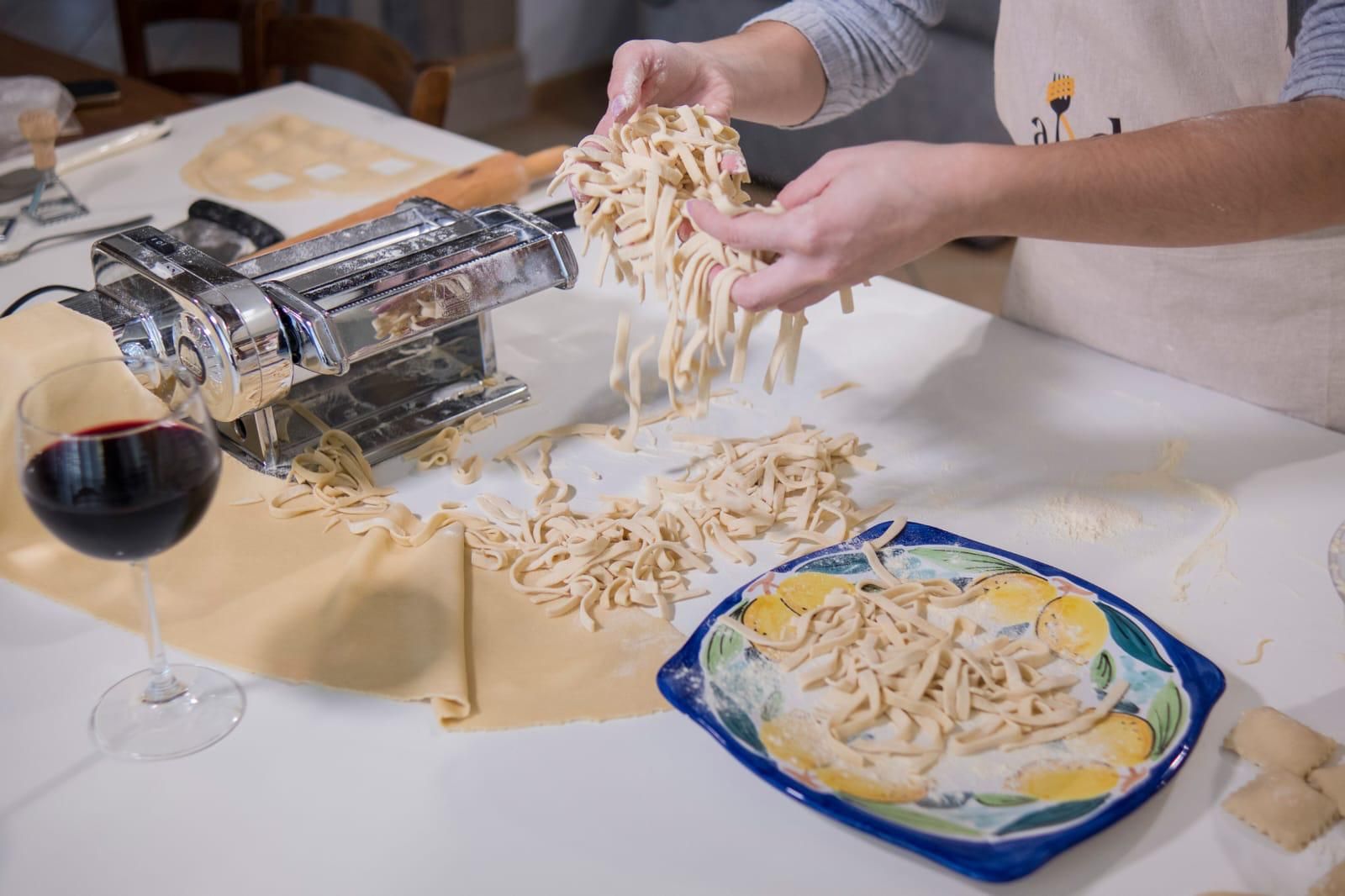
Marble or wooden counters set up for hand-rolling fresh pasta shapes like tagliatelle and gnocchi form the core teaching stations of the class. Guests work directly with the chef through each stage of dough and shaping.
A dedicated station is used for teaching the traditional method of steeping Sorrento lemon peels in alcohol to produce limoncello. The process introduced here typically requires several days of infusion before bottling.
You arrive at Villa Silvana between noon and one o'clock, matching the class's official start so you don't miss the introduction. Someone hands you an apron, then a glass of something cold and lemon-bright, and you gather at a marble counter with a small group. The instructor sets out flour, eggs, and a bowl of semolina, and you begin with your hands rather than a printed sheet. You make the well, crack the eggs into it, and learn how much flour the dough actually wants — more on a humid day, less on a dry one. You knead until the surface turns smooth, then rest it under a cloth while you move to the sauce. You crush tomatoes, tear basil, and watch garlic go pale gold in oil. When the dough is ready, you roll and cut, or press gnocchi against a fork until each one carries its ridge. Midway, you step to the window. Vesuvius stands across the bay, and the terraces below drop toward the water in bands of citrus and olive. Then back to the heat: you salt the water heavily, drop the pasta, and time it by feel. The room fills with steam and the smell of reduced tomato. You sit to eat what you made, usually with wine and a final pour of limoncello. A Sorrento cooking class ends slowly here, at the table, plates passed and technique replayed in conversation. You leave with the recipes written in your hands.
All the details about your upcoming adventure in one place
A sorrento cooking class pairs hands-on pasta making with regional dishes rooted in Campania's citrus groves and coastal larder. Led by local chefs in a working kitchen, these corso di cucina sessions cover gnocchi, ragù, and limoncello traditions from the Amalfi Coast. Most sorrento cooking class tours end with a shared table where you eat everything you prepared.
The lemons of the Sorrentine peninsula grow as large as a fist, protected since 2000 by a European geographic designation that ties the fruit to this stretch of Campanian coast alone. That fruit anchors much of what happens at Villa Silvana, where a sorrento cooking class turns regional produce into the afternoon's whole vocabulary. The setting is not incidental. Perched above the Bay of Naples, the villa looks across water toward Vesuvius, whose volcanic soil feeds the San Marzano tomatoes and the herbs that reach the workstations. Cooking here belongs to a longer Campanian story. Gnocchi alla sorrentina, gnudi, and hand-rolled pasta descend from a peasant kitchen that made abundance out of little: semolina, water, garden vegetables, and the fior di latte that arrives daily from nearby dairies. The mozzarella tradition of the region predates refrigeration; families ate what the morning produced. A lesson at Villa Silvana inherits that immediacy, working from ingredients rather than recipes fixed in advance. The villa itself is a working culinary space rather than a museum piece. Long marble counters, a wood surface for kneading, and an open kitchen let a small group watch technique up close: the wrist turn that ridges a gnocco against a fork, the resting time that lets dough relax, the ratio of egg to flour that separates a northern noodle from a southern one. Instructors are local, and the emphasis stays practical. Semantic variations of the experience — a Sorrento cooking class tour, a corso di cucina a sorrento — all circle the same principle, that Campanian food is learned by hand. Context matters as much as content. Sorrento sits at the neck of a peninsula that has fed travelers since Roman senators built seaside villas here, and the town's food culture absorbed Greek, Bourbon, and Mediterranean threads over centuries. Limoncello, invented on the peninsula in the early twentieth century, distills that lemon heritage into a single glass. The best sorrento cooking class tours read this landscape as pantry: citrus terraces, olive groves, and the fishing fleets of Marina Grande all supply the table. What the villa offers, finally, is legibility. Ingredients that a visitor might pass in a market — provola, colatura, Amalfi lemons, farm eggs — acquire a use and a history. Booked per class rather than by gate ticket, each session hosts a limited number so that hands stay busy and instruction stays direct. The address is fixed at Villa Silvana, Sorrento, and the view over the bay is constant, but the produce shifts with the season, which is the point. A kitchen this close to its sources cannot repeat itself exactly, and that variability is the quiet argument for learning to cook where the ingredients are grown.
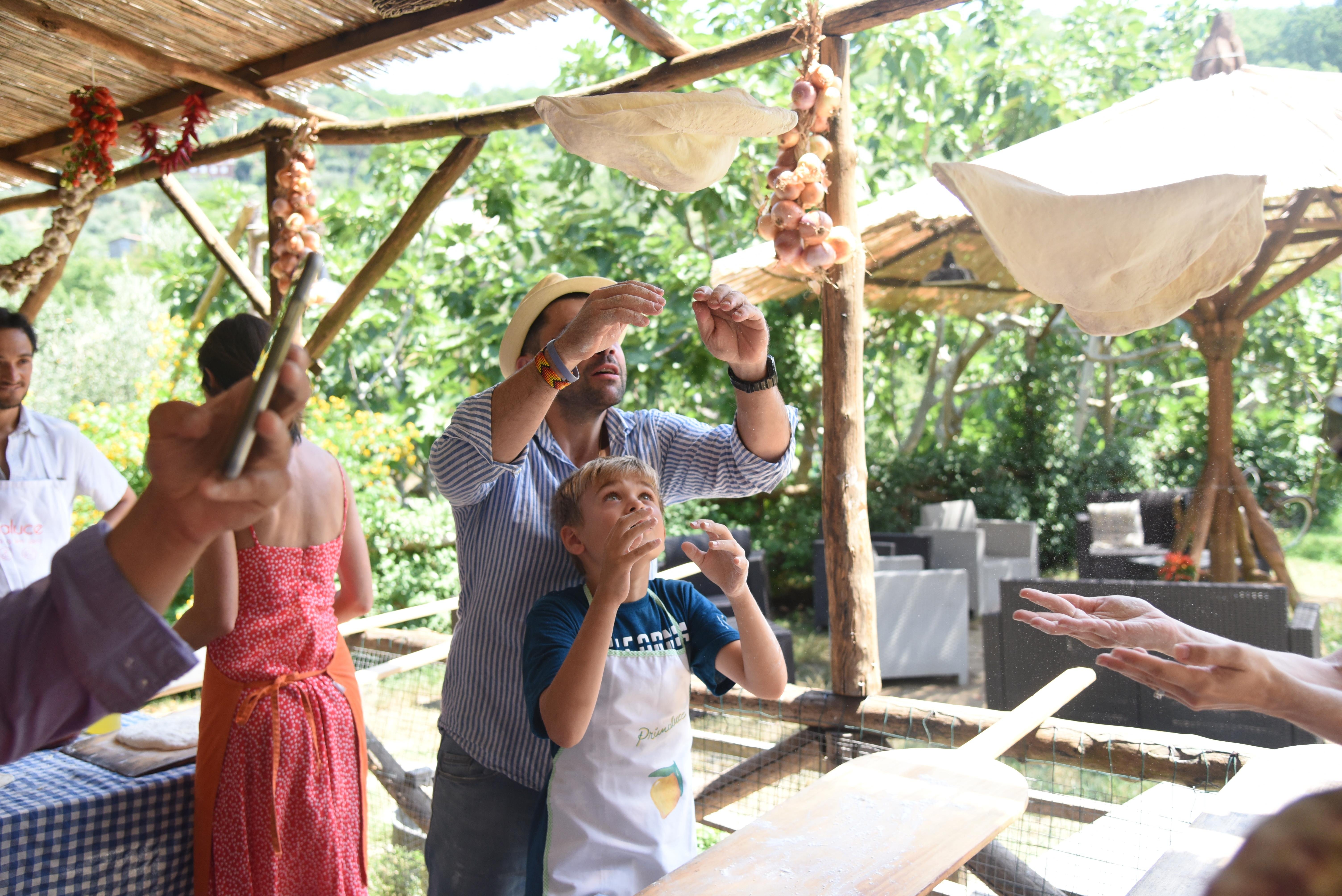
Campanian food is learned by hand, not read from a page.
Casual, comfortable clothing is fine for a sorrento cooking class; closed-toe shoes are recommended near the wood-fired oven and stovetops. Aprons are supplied for the lesson, so guests do not need to bring their own kitchen wear.
There is no bag-check or security screening at Villa Silvana, as this is a small private cooking school rather than a monument. Guests can leave small bags at the terrace tables while working at the counters during the class.
Personal photos and videos of the pasta-making, pizza-stretching, and limoncello steps are welcome throughout the session. Many guests photograph the terrace view of the Gulf of Naples and Mount Vesuvius before sitting down to eat.
Children's cooking classes are offered, and family groups can book a shared table. Kid-friendly recipes like pizza dough are adjusted for smaller hands under supervision.
The terrace and indoor kitchen room are on ground level with step-free access from the villa entrance. Guests with mobility needs should mention this when booking so the school can position workstations accordingly.
The sorrento cooking class itself includes tasting everything prepared, from handmade pasta to pizza and limoncello, served on the terrace overlooking Vesuvius. Dietary restrictions and gluten-free requests should be flagged when reserving so ingredients can be adjusted.
Two start times, 12:00 or 17:00
Popular midweek slot, book early
Busier before weekend groups
Peak demand, private tables fill fast
Hours
Daily 12:00–20:00, class start at 12:00 or 17:00
Address
Villa Silvana, Sorrento, Naples, Italy
Access
Ground-floor terrace and indoor room, ask ahead for step-free route
Best arrival
12:00–13:00 to match the sorrento cooking class official start
Bring
Comfortable shoes, appetite, no heavy bags
Car · 10-15 min from Sorrento center · Free parking
Free parking is available near Villa Silvana, and the school is easily reached by car or motorbike from anywhere in central Sorrento. GPS navigation to Villa Silvana is straightforward within the town.
Walk · 10-20 min · No cost
Villa Silvana sits within walking distance of central Sorrento's main piazzas and the train station. Most hotels in town are a 10-20 minute walk away.
Taxi · 5-10 min · Approx 10-15 EUR
Taxis are readily available from Piazza Tasso or the Circumvesuviana train station to Villa Silvana. A short ride typically costs a modest fixed local fare.
Public transport · 20-30 min from station · A few euros per ride
Local buses run through central Sorrento with stops within walking distance of Villa Silvana. The Circumvesuviana train connects Sorrento to Naples and Pompeii before a short walk or taxi to the villa.
Bookings can be cancelled free of charge up to 72 hours before the scheduled lesson. There is no separate entrance or gate fee since the class itself, priced from 180 to 300 EUR per person depending on group size, is the only charge.
Recommended time
3-4 hours
Most sessions at Villa Silvana run three to four hours, covering the hands-on lesson plus a seated tasting of what you have cooked on the terrace above the Gulf of Naples. Arriving right at the 12:00 start keeps you with the group for the intro and ingredient walkthrough, so add 15-20 minutes if you are new to the area or driving in from central Sorrento. Larger bookings pace a little slower during prep since chefs rotate between tables, while smaller or private groups often finish the cooking portion faster and linger longer over the meal. There is no ticket queue to plan around, since a sorrento cooking class runs on a fixed booking slot rather than walk-up entry.
Crowd levels through the day
Weather · crowds · average price — dots go green to amber to red as each metric rises.
March to May brings mild 15-22°C days and lighter tourist crowds, ideal for a relaxed sorrento cooking class before peak season. Lemon groves are in bloom, adding scent to the terrace setting.
June to August is peak season with temperatures reaching 28-32°C and the highest demand for classes, so early booking matters. Evening 17:00 sessions are popular to avoid midday heat.
September and October offer warm 20-26°C weather and thinner crowds after the August rush. Harvest-season produce like fresh tomatoes and basil features heavily in the lessons.
November to February is quiet with cooler 8-14°C days, and classes move to the indoor kitchen room more often. This is the calmest window for a private, uncrowded session.
The sorrento cooking class runs at either 12:00 or 17:00, so choose the slot that fits the rest of your day in Sorrento before other plans fill in.
Flag allergies, vegetarian, or gluten-free requests when reserving so the chef can adjust ingredients ahead of the lesson.
Kitchen floors can get dusted with flour during pasta and pizza work, so avoid delicate footwear.
Weather determines whether the sorrento cooking class happens on the Villa Silvana terrace or in the indoor kitchen, so ask which is planned if the view matters to you.
Villa Comunale gardens and Marina Grande are both a short walk away and suit a stroll before your class.
Even in summer, a breeze off the Gulf of Naples can make the open terrace cooler in the evening slot.
Drivers can park freely near the villa, useful for those combining the class with a day trip to Pompeii or Positano.
Sorrento, Naples, Italy
Main entrance gate, chef greets groups here for the sorrento cooking class
Get directionsSorrentine cooking grew from the peninsula's terraced hillsides, where lemon groves and vegetable plots met the Bay of Naples. The IGP lemon, the Femminello Ovale di Sorrento, has been cultivated here since at least the sixteenth century. Its thick, fragrant peel gave rise to limoncello, a liqueur bottled in the region long before it gained wider fame in the 1980s. A sorrento cooking class draws directly on this agricultural inheritance. Fresh pasta anchors the local table. Gnocchi alla sorrentina, dressed with tomato, basil, and fior di latte, takes its name from the town itself. To the north, Naples formalised the wood-fired pizza in the eighteenth century; the Associazione Verace Pizza Napoletana codified its rules in 1984, and UNESCO inscribed the art of the Neapolitan pizzaiuolo in 2017. These techniques travelled the short road south, shaping how sorrento cooking class tours present the craft today. Villa Silvana, at its address in Sorrento, sits within this landscape rather than apart from it. Its terrace looks over citrus and olive, the same view that framed rural kitchens for generations. The setting is deliberate: instruction unfolds where the ingredients grow, so a sorrento cooking class tour reads the food against the land that produced it. Dough, sauce, and zest are handled in sequence, each tied to a named local product. The modern school formalised what families once passed down by hand. Recipes for melanzane and dolci that circulated in Sorrentine households now form a taught curriculum, documented and repeatable. That continuity is the point. Guests booking sorrento cooking class tickets step into a tradition with roots in the groves above the bay, carried forward through the Villa Silvana kitchen. The lemon, the mozzarella, and the flour remain what they were, and the terrace keeps the food joined to the coast that gave it meaning.
Femminello Ovale di Sorrento lemon cultivation documented on the peninsula's terraces.
Wood-fired pizza takes formal shape in nearby Naples.
Limoncello, long bottled locally, spreads to wider markets from the Sorrento coast.
The Associazione Verace Pizza Napoletana codifies rules for authentic Neapolitan pizza.
UNESCO inscribes the art of the Neapolitan pizzaiuolo on its heritage list.
Villa Silvana teaches gnocchi, pizza, and limoncello daily from its Sorrento terrace.
A sorrento cooking class at Villa Silvana works well for families, since the kitchen and terrace setup keeps kids near their parents throughout the hands-on session rather than sending them off separately. Groups often mix adults and children of different ages, and the pace stays flexible enough for younger cooks to step back when needed.
The villa's terraces and kitchen areas involve steps and uneven garden paths, so a stroller is impractical; plan to carry infants or use a soft carrier instead.
Kids around 7 and up tend to stay engaged for the full hands-on portion, while younger children often manage the pasta-making stage before losing focus during longer simmering or plating steps.
A 3-hour session mixes active tasks (kneading, shaping) with waiting stretches, so plan short breaks for younger participants and let them rejoin for the tasting at the end.
If a child drifts off, staff generally let them step onto the terrace or sit with a parent rather than forcing continued participation, since the group moves at a shared pace.
Because classes seat 2 to 10+ participants together, families often share a table with unrelated adults, so instructors typically pair kids with a parent for each cooking station.
Contact the school in advance about baby-changing or highchair needs, since Villa Silvana is a residential-style venue rather than a purpose-built family attraction.
Real experiences from real travelers
We booked the sorrento cooking class after a long train from Naples and it was the calmest part of our trip. The nonna walked us through gnocchi and a proper ragu on a terrace that smelled of citrus the whole afternoon. By the time the limoncello came out the light had gone gold over the bay.
Even as an Italian I learned a few things about laminating dough by hand here. The kitchen was warm from the wood oven and the host was patient with the slower ones in our group. Good value for a half day of eating what you made.
The sorrento cooking class tour started with a short market walk to pick tomatoes and basil, which I loved. The terrace got very warm around one in the afternoon so bring a hat and water. Food was honest and the ricotta gnocchi turned out better than I expected.
We rolled our own pasta and made tiramisu from scratch while looking out at Vesuvius across the water. The limoncello tasting at the end used lemons from the garden right beside us. I would put this near the top of any Sorrento landmarks list for food lovers.
Booking sorrento cooking class tickets was simple and the confirmation came quickly. Our host showed us how to make mozzarella stretch and we ate everything at a long table under a pergola. The whole thing felt like being invited into someone's family kitchen.
It drizzled the morning we went so we spent extra time inside the farmhouse kitchen, which was cozy. We made pizza in the wood-fired oven and the crust came out blistered and light. The classe di cucina a Sorrento was easily the meal we talked about most on the whole trip.
Come hungry because the sorrento cooking class tours feed you constantly from the first bruschetta to the final slice of lemon cake. The chef explained why the local lemons are so large and fragrant. Late afternoon on the terrace with the bay below was the highlight.
Our group was a touch large for the space so it got crowded near the stove. That said the pasta making was hands-on and nobody was left watching. The garden lunch afterward with limoncello made up for the squeeze.
A proper Sorrento cooking experience with a market stop, a farmhouse kitchen and a lemon grove all in one afternoon. We made gnocchi, ragu and tiramisu and still had room for the limoncello tasting. The view of the Bay of Naples at golden hour sealed it.
Rolled fresh pasta on a marble counter while the wood oven heated behind us. The host grew up in the house and told stories about the citrus terraces between courses. Easy to reach from the town center and worth the short walk uphill.
Everything you need to know for your journey
Cooking School Sorrento at Villa Silvana operates daily from 12:00 to 20:00, with lessons starting at either 12:00 or 17:00.
There is no separate gate or entrance fee; the sorrento cooking class is booked per session, priced from 180 to 300 EUR per person depending on group size.
Arriving between 12:00 and 13:00 matches the official start time and avoids missing the lesson introduction.
The terrace and indoor kitchen at Villa Silvana are ground level with step-free access, though guests should mention mobility needs when booking so the chef can arrange the workstations.
No, there is no formal security screening for the sorrento cooking class since Villa Silvana operates as a small private cooking school rather than a monument.
Yes, photos and videos throughout the pasta-making, pizza, and tasting portions are welcome, including the terrace views of Mount Vesuvius.
Spring and autumn offer milder weather and thinner crowds for a sorrento cooking class, while summer is peak season with the highest demand for both time slots.
Casual, comfortable clothing works well, with closed-toe shoes recommended near the wood-fired oven; aprons are provided.
Yes, the sorrento cooking class includes tasting everything prepared, such as handmade pasta, pizza, and limoncello, served on the terrace.
Villa Silvana is reachable by car, taxi, or on foot from central Sorrento, with free parking available near the villa for those holding sorrento cooking class tickets.
Yes, children's cooking classes are offered, and families can book a shared table with recipes adjusted for younger participants.
Reservations can be cancelled free of charge up to 72 hours before the scheduled sorrento cooking class tickets are used.
Piazza Tasso, Marina Grande, Villa Comunale gardens, and the Basilica di Sant'Antonino are all within a short walk of Villa Silvana.
Sorrento's central square, lined with cafes and historic buildings, sits a short walk from Villa Silvana. It is a common starting point for exploring the town on foot.
A small fishing harbor with pastel houses and seafood restaurants below the Sorrento cliffs. It offers views back up toward the town and villas.
A 16th-century open-air loggia in the historic center, notable for its majolica-tiled dome. It once served as a meeting hall for the local nobility.
A clifftop public garden with panoramic views over the Bay of Naples toward Mount Vesuvius. It is a popular spot for a short walk before or after a meal.
Sorrento's patron-saint basilica, with a baroque interior and a crypt lined with ex-voto offerings from sailors. It sits just off Piazza Sant'Antonino.
Central Sorrento offers hotels within easy reach of Villa Silvana, from family-run guesthouses to larger properties near Piazza Tasso.
Small boutique stays near the fishing harbor offer sea views and a quieter setting a short walk or taxi from the cooking school.
The main shopping street area has a range of mid-range hotels convenient for walking to Villa Silvana.
Join thousands of happy travelers who have discovered this incredible experience
Book Your Experience Now