8 hr
Sorrento to Herculaneum: Skip-the-Line Guided Tour by Express Train
- Expert local guide
- Small group
- Skip-the-line access
- Free cancellation
Sorrento To Herculaneum — Reserved Entry & Guided Excursions
Buried in ash, opened to light, one Roman town preserved whole.
Compare fares, pick the fit — all bookings are mobile-voucher and eligible for free cancellation where shown.
8 hr
7 hr 30 min
8 hr
Worth it for anyone who values preservation over scale
The sorrento to herculaneum trip costs 16 EUR at the gate, and for that you get one of the best-preserved Roman towns anywhere. Where volcanic mud buried this settlement, it sealed second-storey timber, carbonised furniture, mosaics, and painted walls that rarely survive elsewhere. The compact footprint is the selling point: instead of trudging acres, you walk intact streets and step inside houses that still feel lived-in. That density makes sorrento to herculaneum tours pay off for history-minded travellers, photographers, and anyone short on stamina. The 16 EUR ticket is fair value against the depth on show, and skip-the-line Ercolano entry keeps the queue brief. It pays off less if you want sheer scale or a single blockbuster monument. For a focused half-day among genuine Campania landmarks, the fee is easily justified over skipping the ruins entirely.
Bottom line: For 16 EUR, the sorrento to herculaneum tour delivers rare preservation that justifies the trip for most visitors.
Hand-picked experiences loved by thousands of travelers
4 hours
Free Cancellation
Step into a perfectly preserved Roman town buried by Vesuvius — just 4 hours from Sorrento.
4 hours
Free Cancellation
Step back 2,000 years with an expert archaeologist guide on this 4-hour Herculaneum excursion from Sorrento.
8 hours
Free Cancellation
8-hour guided journey through two ancient Roman cities, with a vineyard lunch near Vesuvius.
Collect tickets on Corso Resina and check bags if needed at the free deposit
Explore the men's and women's thermal baths with intact mosaic floors and heating systems
View the glass-paste mosaic triclinium considered one of the best-preserved in the ancient world
See frescoes of Hercules among the gods in this priesthood meeting hall
View the fornici where the skeletons of over 300 residents were found
Finish at the seaside villa with its marble stag statues and panoramic terrace
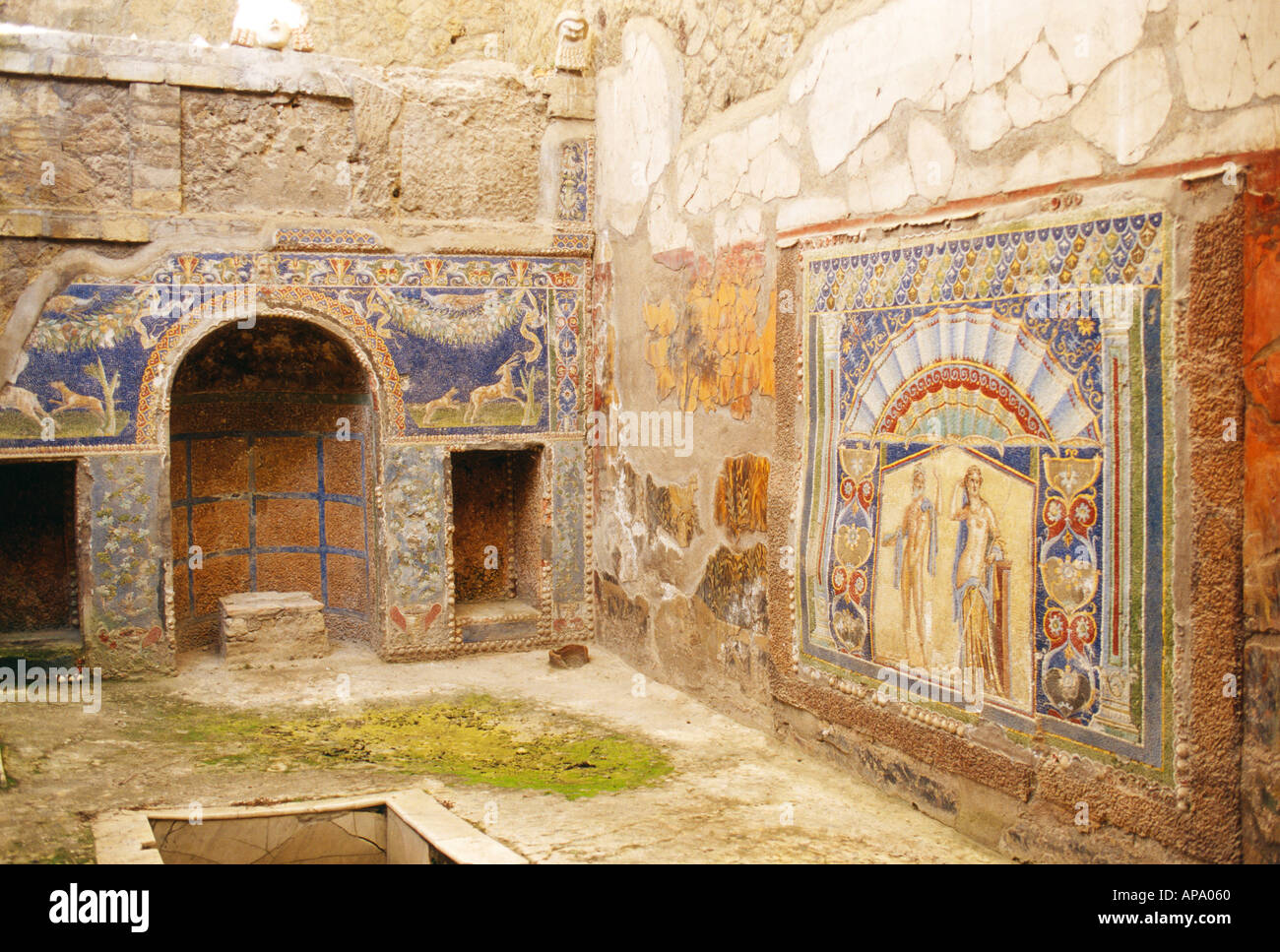
A summer triclinium here holds one of Herculaneum's best-preserved mosaics, a glass-paste depiction of Neptune and his wife Amphitrite framed by a shell-decorated nymphaeum. The adjoining wine shop still displays amphora racks, evidence the owner likely traded wine alongside running the household.
This meeting hall for the priesthood devoted to Emperor Augustus contains large frescoes of Hercules among Olympian gods, still vividly colored after nearly two thousand years underground. The skeleton of the building's custodian was found on his bed, apparently waiting out the eruption.
Excavations between 1980 and the 1990s uncovered the remains of more than 300 people inside stone boat chambers along what was once the beach, victims of the pyroclastic surge as they awaited rescue by sea. Jewelry and coins recovered alongside the skeletons, including the so-called Ring Lady, are now displayed nearby.
Named for marble statues of stags under attack by dogs found in its garden, this seaside villa reflects the Roman ideal of leisure with wide terraces facing the former coastline. A carbonized loaf of bread stamped with a baker's seal was recovered here, preserved intact by the volcanic ash.
One of the oldest surviving homes on the site, its Hellenistic-style atrium features an upper gallery and traces of Fourth Style wall painting predating much of Herculaneum's later Roman architecture. A small rainwater pool and fragments of carved wooden furniture were recovered from the interior.
Though largely unexcavated and closed to general access, this vast suburban villa yielded over 1,800 carbonized papyrus scrolls, the only intact library to survive from classical antiquity. Bronze and marble sculptures recovered from its grounds are now displayed at the Naples National Archaeological Museum.
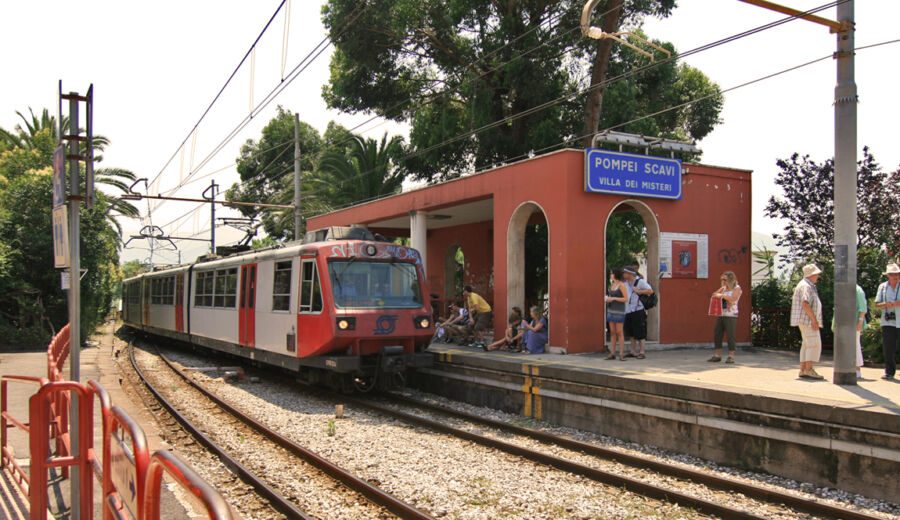
You board the Circumvesuviana at Sorrento and settle in for the ride along the bay, stepping off at Ercolano Scavi station under fifty minutes later. From there you walk downhill about eight minutes along Via IV Novembre until the modern town simply ends and a vast rectangular pit opens below you. You pause at the panoramic terrace first, looking down over the whole excavation at once — a Roman town sunk beneath the living one. A long ramp carries you down into the streets. You pay 16 EUR at the gate, then step onto the ancient pavement, where the marble stepping stones still cross the road. You turn into the House of the Neptune and Amphitrite Mosaic and let your eyes adjust to the blues and greens on the wall. You climb a surviving wooden staircase, run a hand near a carbonised beam, and read the graffiti scratched by people who died in an afternoon. Down at the old shoreline, you stand before the boat chambers and their skeletons. A full sorrento to herculaneum tour of the site takes most visitors two to three unhurried hours. You climb back up the ramp into daylight, the modern street noise returning, and catch the train back toward the bay.
All the details about your upcoming adventure in one place
The sorrento to herculaneum route carries you along the Bay of Naples to Ercolano, where a compact archaeological park preserves timber balconies, carbonized furniture, and intact upper floors buried under volcanic mud from Vesuvius. Guided sorrento to herculaneum tours pair a comfortable coach transfer with an expert on Roman daily life, so you spend your energy on the excavations rather than the logistics. This corner of the Naples coast rewards travelers drawn to UNESCO heritage sites and the quieter counterpart among the region's landmarks.
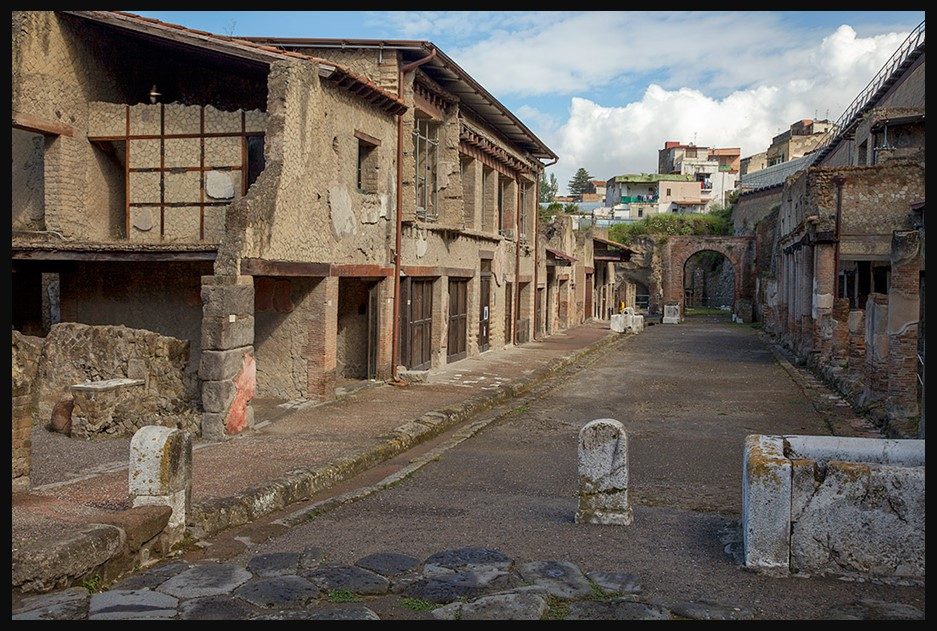
When Vesuvius erupted in 79 AD, Herculaneum was not buried by falling ash but sealed by a surge of superheated volcanic mud that hardened into rock up to twenty metres deep. That difference in death preserved a difference in survival. Where nearby Pompeii lost its upper storeys and organic material, Herculaneum kept its wooden beams, doors, staircases, and even carbonised loaves and rope. The town that a journey from sorrento to herculaneum reaches today is therefore not a ruin in the ordinary sense but a Roman seaside settlement caught mid-breath. Herculaneum was a smaller, wealthier place than Pompeii, a resort of roughly four to five thousand people facing the water before the coastline shifted. Its grid of streets — the decumanus maximus, the cardines running toward the ancient shore — still carries the marble thresholds and stepping stones of daily life. The scale is compact, walkable in a focused visit, and denser in detail than its larger neighbour. The architecture rewards slow reading. The House of the Neptune and Amphitrite Mosaic keeps a wall mosaic in blues and greens so vivid it still startles. The College of the Augustales holds frescoes of Hercules, the demigod for whom the town was named. Along the old waterfront, the boat chambers where hundreds sheltered from the surge were excavated in the 1980s, their skeletons overturning the older belief that residents had escaped by sea. Multi-storey buildings, rare in the ancient record, survive here with second floors intact, wooden partition screens still standing in the House of the Wooden Partition. Excavation began in earnest in 1738 under Bourbon patronage, tunnelled first through the theatre by treasure-hunting engineers, and continues in careful stages into the present, with much of the town still sealed beneath the modern streets of Ercolano above. The Villa of the Papyri, whose carbonised library of scrolls is now being read by particle accelerators and imaging, remains largely underground. This layering of ancient and modern is part of why the site matters: it is a working archaeological frontier as much as a monument. For travellers weighing sorrento to herculaneum tickets against the pull of Pompeii, the appeal here is intimacy and preservation over sheer size. Well-signed multilingual panels and the compact plan make the ruins legible without a guide, though context deepens the walk considerably. Reached easily by the Circumvesuviana rail line along the Bay of Naples, the excavation offers a concentrated encounter with Roman domestic life that few sorrento to herculaneum tours elsewhere can match for sheer human immediacy.
The town is not a ruin in the ordinary sense but a Roman seaside settlement caught mid-breath.
There is no formal dress code, but the site is almost entirely uneven stone paving with steps and sloped ramps, so closed, flat walking shoes are strongly advised over sandals. Summer sun is intense across the largely shadeless excavation area, so light, breathable clothing and a hat are practical for a visit that runs through Corso Resina's exposed streets.
Bags larger than 35x30x15 cm must be left at the free left-luggage deposit near the ticket entrance on Corso Resina. Security staff carry out routine bag checks at the gate, and backpacks are generally fine to carry through the site if within that size limit.
Personal photography and video without flash are permitted throughout the excavated houses and streets. Tripods, monopods, and professional filming equipment require prior written authorization from the Archaeological Park's Superintendency office.
Children under 18 enter free with valid ID, and the compact layout makes a family visit manageable in under two hours. Wheeled strollers struggle on the ancient paving, so an infant carrier is recommended for very young children.
The park has a footbridge circling the perimeter that lets wheelchair users view the excavations from above, and a ramp on the third cardo provides access into part of the lower site when arranged with staff. Visitors with mobility difficulties should speak to security personnel at the Corso Resina entrance on arrival to organize access, since original Roman streets throughout the interior remain uneven with steps.
Eating and drinking are not permitted inside the excavated houses and roped-off domus interiors, though a small cafe and snack kiosk operate near the ticket office outside the archaeological area. Refillable water bottles can be topped up at fountains inside the site, which is useful given the lack of shade along Cardo streets.
Quiet mornings before tour buses arrive
Busier — cruise-day arrivals from Naples
Heaviest crowds of the week
Free entry on first Sunday of the month
Hours: 08:30–19:30 daily
location
Public transport · About 50 minutes · Around 4-5 EUR one-way
Take the Circumvesuviana line from Sorrento station toward Naples and get off at Ercolano Scavi, a trip that runs regularly throughout the day; from the station it is a 10-minute walk downhill along Via IV Novembre to the entrance on Corso Resina.
Car · About 40-50 minutes · Parking roughly 2 EUR per hour
Drive the A3 motorway from Sorrento toward Naples and exit at Ercolano, following signs for Scavi; paid parking is available near the Via dei Papiri Ercolanesi entrance.
Taxi · About 40-50 minutes · Higher fixed fare, agree price beforehand
A private taxi from Sorrento covers the same A3 route as driving but avoids parking search time, useful for groups traveling together.
Standard entrance tickets bought at the gate for 16 EUR are non-refundable once issued, since they are timed for same-day use. Pre-booked tickets through official resellers typically allow free cancellation up to 24 hours before the visit date; check the specific terms shown at purchase.
Recommended time
2-3 hours
Two to three hours covers the excavated streets, the main houses, mosaics, and the old boat houses along the ancient shoreline without rushing; self-guided visitors moving quickly can manage it in around 90 minutes, while joining a guided sorrento to herculaneum tour tends to run closer to three. Arriving during the 08:30-10:30 window matters more than most people expect, since ticket queues are shortest right at opening and the compact site fills with tour groups fast once mid-morning arrives. Booking sorrento to herculaneum tickets in advance or opting for skip-the-line sorrento to herculaneum tours avoids a slow start at the gate. Plan your Sorrento departure so you're through the entrance before the first coach groups land, giving your legs and camera the clearest run of the site.
Crowd levels through the day
Weather · crowds · average price — dots go green to amber to red as each metric rises.
April and May bring mild temperatures around 18-22°C and thinner crowds than summer, making this a preferred season for combining a Sorrento to Herculaneum day out with a walk through Ercolano's old town.
July and August see peak heat often above 30°C with minimal shade across the site, so visitors doing a Sorrento to Herculaneum tour in this window should plan for the early opening hours.
September and October offer warm but less intense weather, with cruise-ship crowds from Naples tapering off after mid-September.
December through February is coolest and quietest, though shorter daylight hours mean an earlier start suits a Sorrento to Herculaneum itinerary best.
Standard adult tickets can be purchased directly at the Corso Resina window for 16 EUR without needing advance reservation in most seasons.
Entry is free on the first Sunday of each month plus April 25, June 2, and November 4, though it draws larger crowds.
Bags over 35x30x15 cm must be checked at the free deposit near the entrance before proceeding through the gate.
Ercolano Scavi station exits into a stretch of guides and shuttle touts; the walk to the site along the main street is straightforward without needing their services.
There are few shops between the station and the gate, so carrying a refillable bottle helps on the 10-minute downhill approach.
The Virtual Archaeological Museum near the entrance offers useful context that pairs well before entering the excavated houses.
Travelers doing sorrento to herculaneum day trips with day packs should check dimensions against the 35x30x15 cm limit to avoid repacking at the gate.
Corso Resina 187, Ercolano (NA), 80056
Primary ticket gate and starting point for guided tours
Get directionsVia dei Papiri Ercolanesi 19, Ercolano (NA), 80056
Secondary access point near municipal parking
Get directionsIn August of 79 AD, Vesuvius buried Herculaneum. The town did not burn slowly under falling ash, as Pompeii did. Instead, successive pyroclastic surges swept down the slope at great heat. The organic material carbonised in place. Wood, rope, food, and even papyrus scrolls survived as charred forms. The flows then hardened into volcanic tuff up to twenty metres deep, sealing the streets. This depth explains why the ancient shoreline sits far inland today, and why any modern sorrento to herculaneum visit reaches a site preserved beneath a living town. Rediscovery came by accident. Around 1709, a well-digger struck marble at the bottom of a shaft near the Theatre. The Austrian prince d'Elbeuf bought the ground and mined it for statuary. Serious work began under Charles of Bourbon. From 1738, the engineer Rocque Joaquín de Alcubierre drove tunnels through the tuff by lamplight. These Bourbon galleries yielded the bronze and marble now in Naples, and in 1750 exposed the Villa of the Papyri with its carbonised library. Tunnelling was slow and destructive, and much was backfilled. Systematic open-air excavation waited for Amedeo Maiuri, who worked the site from 1927 into the 1950s. The darkest chapter emerged late. For centuries scholars assumed the townspeople had escaped by sea. Then, from 1980, excavation of the ancient boathouses along the old waterfront uncovered hundreds of skeletons huddled in the vaulted chambers. They had gathered at the shore and died where the first surge overtook them. This find, studied by Sara Bisel, overturned the evacuation theory and gave the town its human record. Understanding this transforms most sorrento to herculaneum tours from sightseeing into something closer to witness. Today the excavated quarter covers only part of the buried city; the forum and much else remain under Ercolano. Visitors on sorrento to herculaneum tickets walk timber balconies, mosaic floors, and preserved upper storeys rare among Roman landmarks. The organised herculaneum guided tour and the wider study of Vesuvian sites continue to yield conservation debate. What survives, from the papyri to the boathouse dead, makes a single sorrento to herculaneum tour a passage through discovery itself.
Pyroclastic surges from Vesuvius buried the town under volcanic tuff up to twenty metres deep.
A well-digger struck the marble of the buried Theatre, and Prince d'Elbeuf began mining for statuary.
Charles of Bourbon began tunnel excavations under engineer Rocque Joaquín de Alcubierre.
Bourbon tunnellers reached the Villa of the Papyri and its carbonised library of scrolls.
Amedeo Maiuri led the first systematic open-air excavation of the site.
Excavation of the ancient boathouses uncovered hundreds of skeletons, overturning the evacuation theory.
UNESCO inscribed Herculaneum as a World Heritage Site alongside Pompeii and Torre Annunziata.
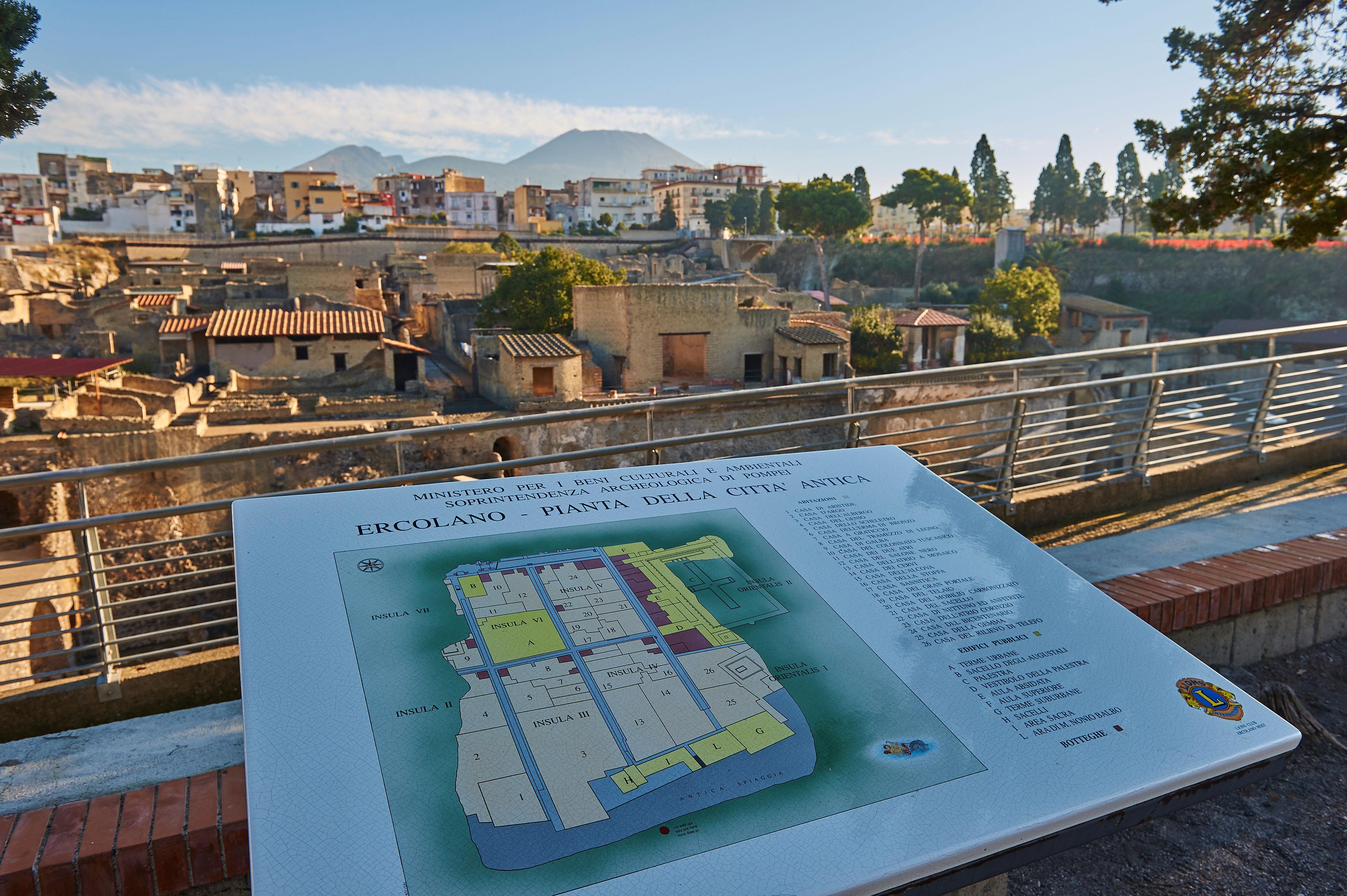
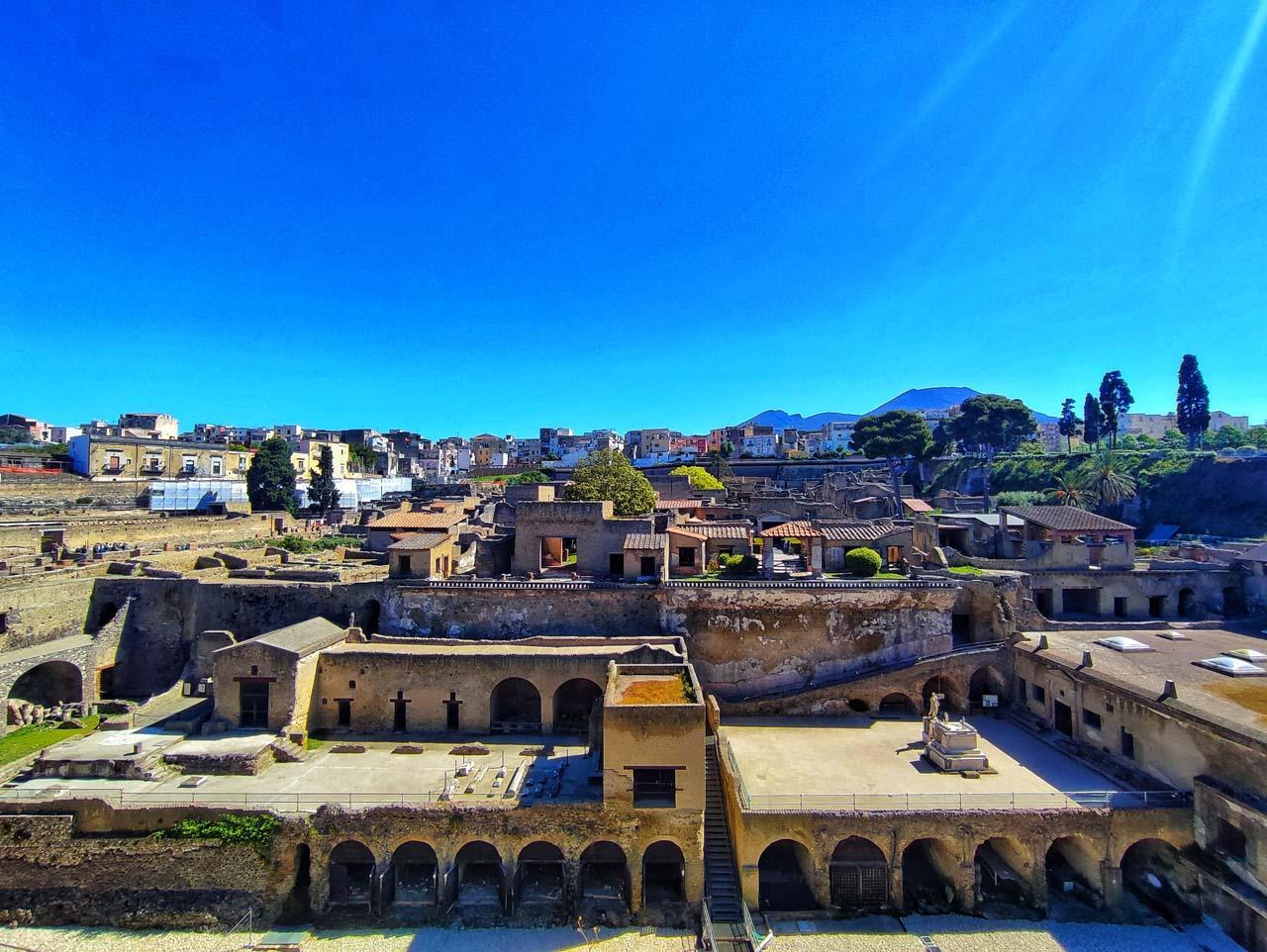
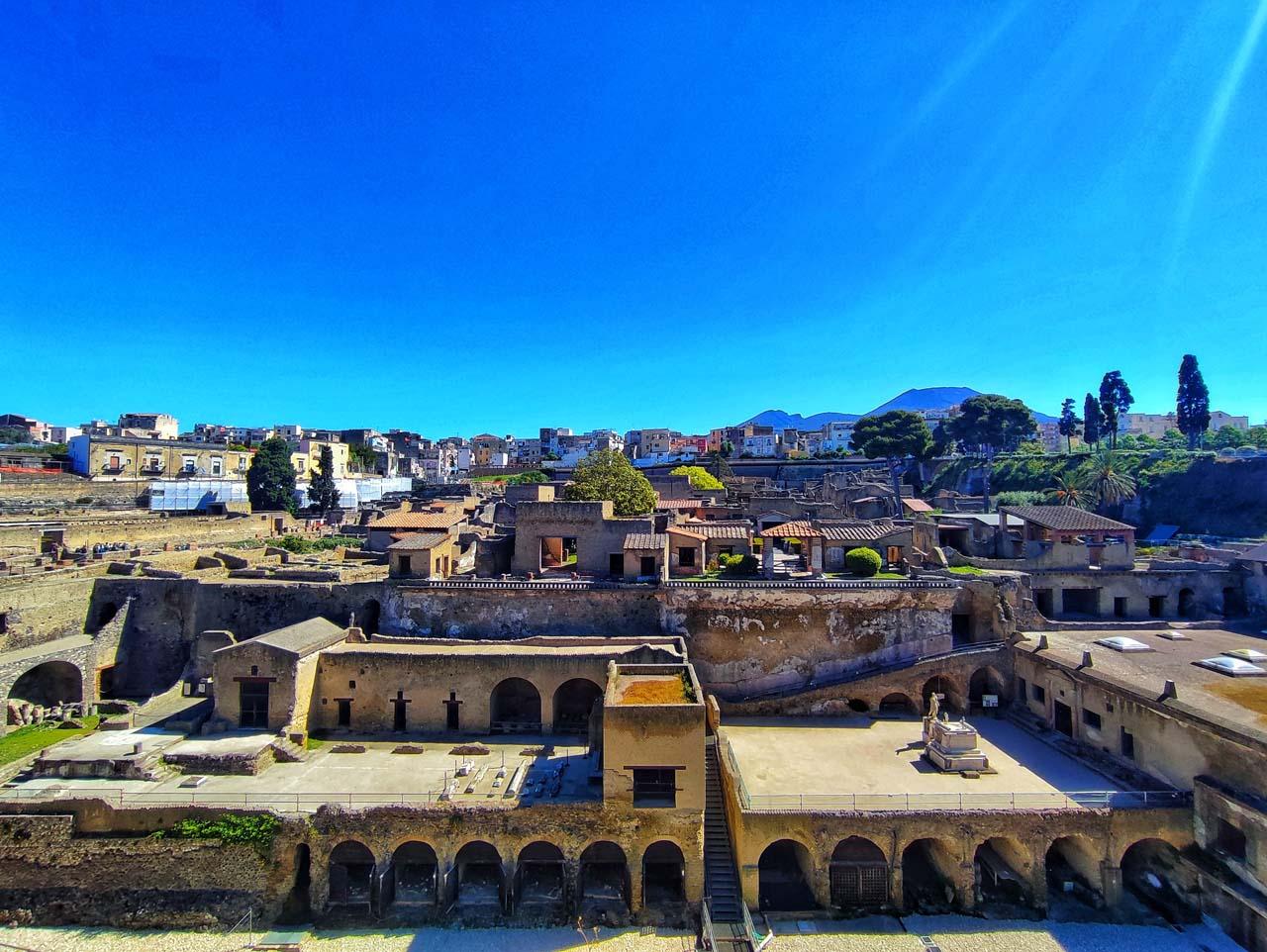
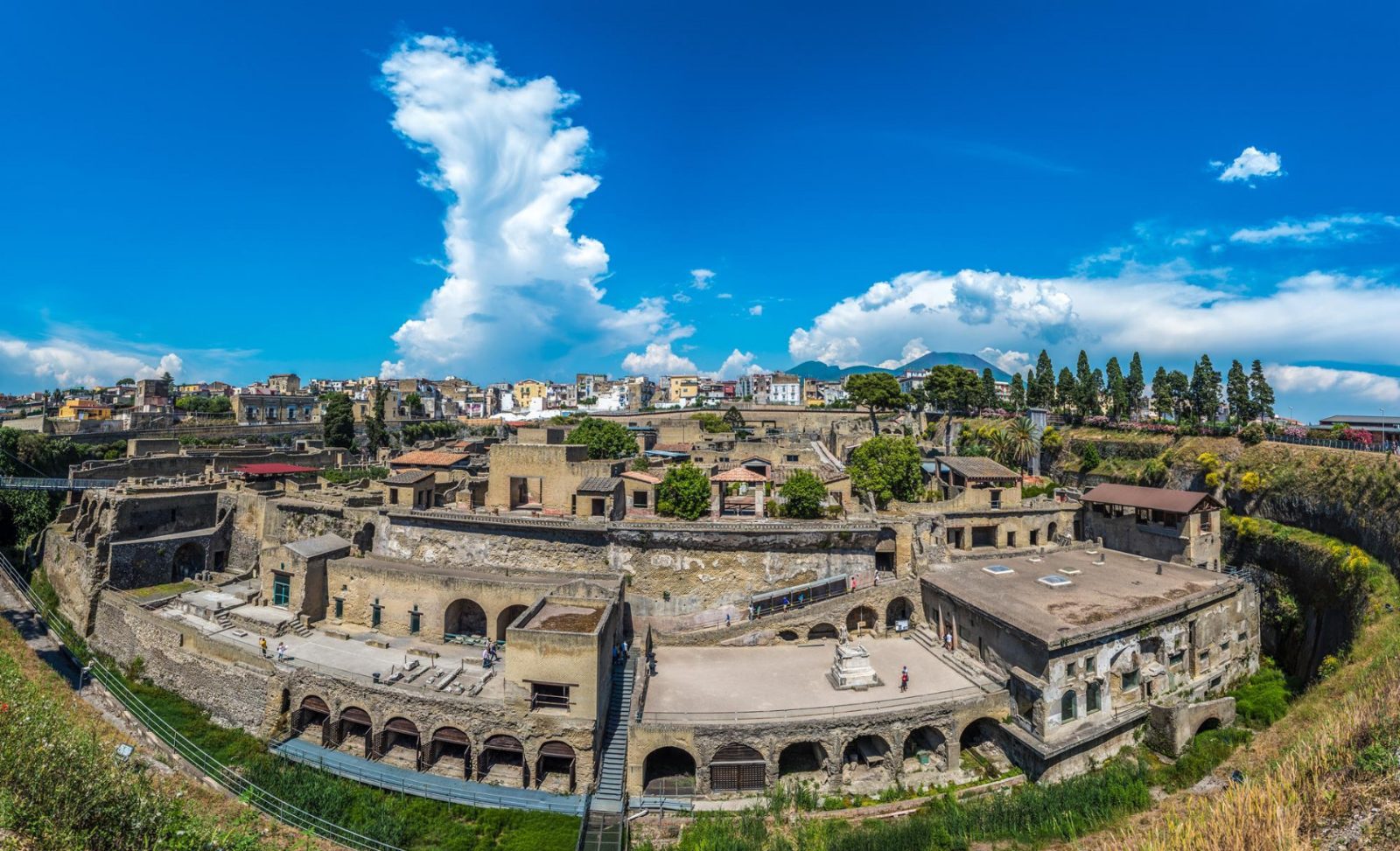
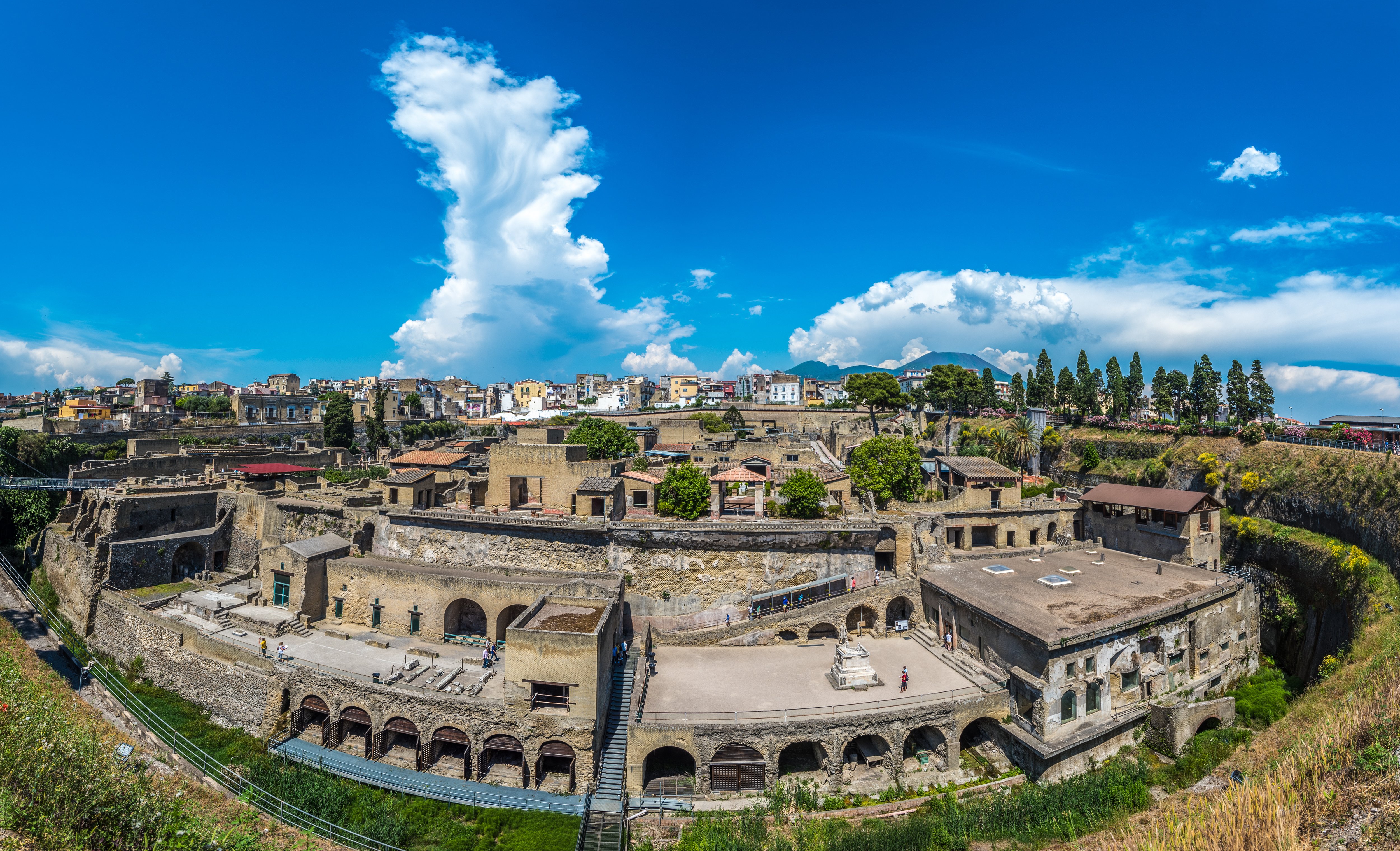
Just past the ticket gate, an elevated modern walkway looks straight down into the excavated town, with the grey apartment blocks of modern Ercolano rising behind the ruins. Stand at the railing for the classic wide shot that shows the full depth of the excavation in one frame. This is the spot most visitors on a sorrento to herculaneum day trip photograph first, before descending into the site.
A row of vaulted chambers, known locally as fornici, lines the old beachfront beneath the Terrace of the Sacred Area, with the modern town visible on the ridge above showing how far the coast has shifted. Shoot from the raised walkway facing the arches, or crouch low near the barrier for a shot that lines up several vault openings at once. Flash and tripods are restricted here.
This broad terrace above the old shoreline gives a clean elevated angle back over the boathouses and beach level, plus a view toward the bay beyond the site. Position yourself near the terrace edge rather than the rear wall to keep the modern skyline out of frame. It also works well as a reverse shot back toward the entrance overlook.
Inside Insula III.11, a carbonized wooden partition still stands between the atrium and tablinum, one of the best-preserved timber fittings on the whole site. Frame it from the atrium looking toward the tablinum to catch the impluvium basin in the foreground and the screen's charred grain in the middle distance. Natural light through the roof opening changes through the day, so check a couple of angles before settling on one.
A day trip from sorrento to herculaneum suits families well because the site is compact enough to explore in two to three hours, far shorter than a Pompeii visit, so kids stay engaged rather than worn out. Younger children in particular do better here, where distances are short and there's more shade than at the larger site nearby.
School-age kids from around 6 up get the most out of it, since they can read the compact layout and grasp the scale of an ancient street frozen in place. Toddlers manage fine too, given the shorter distances, but expect to carry them over uneven stretches.
Plan on two to three hours total, moving slowly rather than rushing, since kerbs and stepped thresholds between houses mean frequent slow-downs. Break the visit into two loops with a rest in between rather than one long push.
The ancient paving is uneven and slippery when wet, with high kerbs at many house entrances, so budget extra time for careful footing. Shade is limited among the walls, so plan your route to pass through shaded pockets during the hottest midday stretch.
Toilets sit near the entrance rather than inside the ruins, so use them before heading in. There's a small café by the ticket office, but nothing further along the walking route.
The site is entirely open-air with no covered fallback, so a rainy day means slippery stone paving on top of the usual unevenness. Consider swapping to a museum visit that day and returning to Herculaneum when conditions dry out.
A private herculaneum tour for kids with a guide can help hold younger children's attention better than a self-guided walk, since guides tend to pace stops around shorter attention spans. Look for options that include activity booklets or scavenger-hunt style maps for children.
There is no dining inside the site itself, but Corso Resina, the street connecting Ercolano Scavi station to the entrance, is lined with casual trattorias and pizzerias suited to a quick lunch on a sorrento to herculaneum day trip. Most people eat here before catching the train back rather than carrying food onto the ruins.
Sit-down Neapolitan cooking on Corso Resina with seafood pasta and local wine; popular at midday so expect a short wait if you arrive right after the site closes for lunch.
Wood-fired pizzas at low prices near the station, a reliable stop for a fast bite before heading back on the Circumvesuviana; portions run large and service is quick.
Grilled meats, wine, and Campanian small plates a short stroll down Corso Resina; better suited to a relaxed lunch than a rushed one between train connections.
Pastries, coffee, and light sandwiches right near the Corso Resina entrance, good for a fast breakfast during the site's best arrival window before the midday crowds.
Simple panini and rolls for travelers who want something portable to eat on the walk back to Ercolano Scavi station rather than a sit-down meal.
Real experiences from real travelers
We took the early Circumvesuviana from Sorrento and were at the gate before the heat built up. The sorrento to herculaneum journey was smoother than the guidebooks warned, and the compact site meant we saw the mosaics, the boathouses, and the wooden partitions without feeling rushed. The carbonized beams still overhead are what stayed with me.
Standing on the ancient shoreline with Mount Vesuvius on the horizon made the scale of the eruption click in a way no photo had. Our sorrento to herculaneum tour guide pointed out the skeletons in the vaults quietly, without theatrics. Bring water because shade is thin by late morning.
The frescoes and the Neptune mosaic held their color better than I imagined, deep blues right there on the wall. We arrived around noon and the narrow decumanus got tight with groups. If you can, do one of the earlier sorrento to herculaneum tours instead.
Compared with the wider Roman landmarks I have seen, the two-story houses here felt strangely intact, upper floors and all. The train from Sorrento was simple once we found the right platform. Wooden furniture surviving two thousand years is hard to process.
A gita da Sorrento a Ercolano is quick, and the site rewards slow walking rather than a checklist pace. Sunlight came through the atrium of one villa and lit the plaster a soft ochre in the afternoon. The upper terraces give a clean view across the whole excavation.
We wanted somewhere less overwhelming and this delivered, cooler and calmer even in the walled trenches. The sorrento to herculaneum tickets were straightforward to sort at the entrance. Loved the little details like the carbonized bread and the drainage channels underfoot.
Late afternoon light hitting the glass tiles of the sea-god mosaic was the highlight of our Sorrento excursion. Our Herculaneum guided tour ran about three hours which felt right for the size of the ruins. Wear proper shoes, the ancient paving is uneven.
Skip-the-line entry saved us a wait behind two large coach groups. The sorrento to herculaneum tour was well paced and the guide knew which houses reopened after recent conservation work. A hat is essential in the exposed lanes near the forum baths.
Descending toward the old marina where the vaults held the fleeing crowds was sobering and unforgettable in the plain sense of the word. Sorrento landmarks are lovely, but this half-day across the bay felt more meaningful. Go early, the morning air along the shore level is cooler.
Everything is close together so we covered the site comfortably before lunch. The sorrento to herculaneum tickets included a decent map that made self-guided exploring easy. Standing under a surviving Roman roof with Vesuvius in view is something I keep describing to people back home.
Everything you need to know for your journey
The archaeological park is open daily from 08:30 to 19:30, and a sorrento to herculaneum tour timed for the earliest hours avoids both midday heat and tour-group congestion.
Herculaneum has a footbridge that circles the site for elevated viewing and a ramp on the third cardo for staff-assisted access, though interior streets remain uneven with steps in most houses.
Bags up to 35x30x15 cm can be carried inside; anything larger must go into the free left-luggage deposit at the Corso Resina entrance before starting the sorrento to herculaneum tours route.
Personal photography without flash is permitted throughout the site, while tripods and professional filming gear require prior authorization from the park's Superintendency.
Arriving between 08:30 and 10:30 offers cooler temperatures and fewer tour groups, making this window ideal for anyone booking sorrento to herculaneum tickets in summer.
No formal dress code applies, but flat closed shoes are recommended given the uneven Roman paving and stepped ramps throughout Herculaneum's ancient streets.
Eating and drinking are restricted inside the excavated houses, though a small cafe operates near the ticket office for a break before or after the visit.
From Sorrento station, take the Circumvesuviana line toward Naples and disembark at Ercolano Scavi, then walk about 10 minutes downhill to the Corso Resina entrance.
Yes — children under 18 enter free with ID, and the compact layout suits a shorter family visit better than larger sites nearby.
Gate tickets bought same-day are generally non-refundable, while pre-booked tickets through official resellers often allow free cancellation up to 24 hours ahead.
The MAV Virtual Archaeological Museum and Villa Campolieto are both a short walk from the site and make natural additions to Ercolano landmarks after the excavation.
Full-price adult entry is 16 EUR per person at the gate, payable directly at the Corso Resina ticket window.
An interactive museum near the entrance that recreates ancient Herculaneum through digital reconstructions before the eruption.
An 18th-century Vesuvian villa hosting rotating cultural exhibitions in Ercolano's historic center.
The modern town's main street and piazza area between the train station and the excavation gate.
The volcano's crater trail is reachable from Ercolano by bus or organized transfer for a half-day extension.
Simple guesthouses and B&Bs clustered near the train station, convenient for an early gate arrival.
The main hotel district around Piazza Tasso, well connected to Ercolano via the Circumvesuviana line.
A quieter seafront area east of central Sorrento with garden hotels near the coast.
Join thousands of happy travelers who have discovered this incredible experience
Book Your Experience Now